

“CITI”Interview with CITI University President Dr, Professor Ts. Baigalmaa.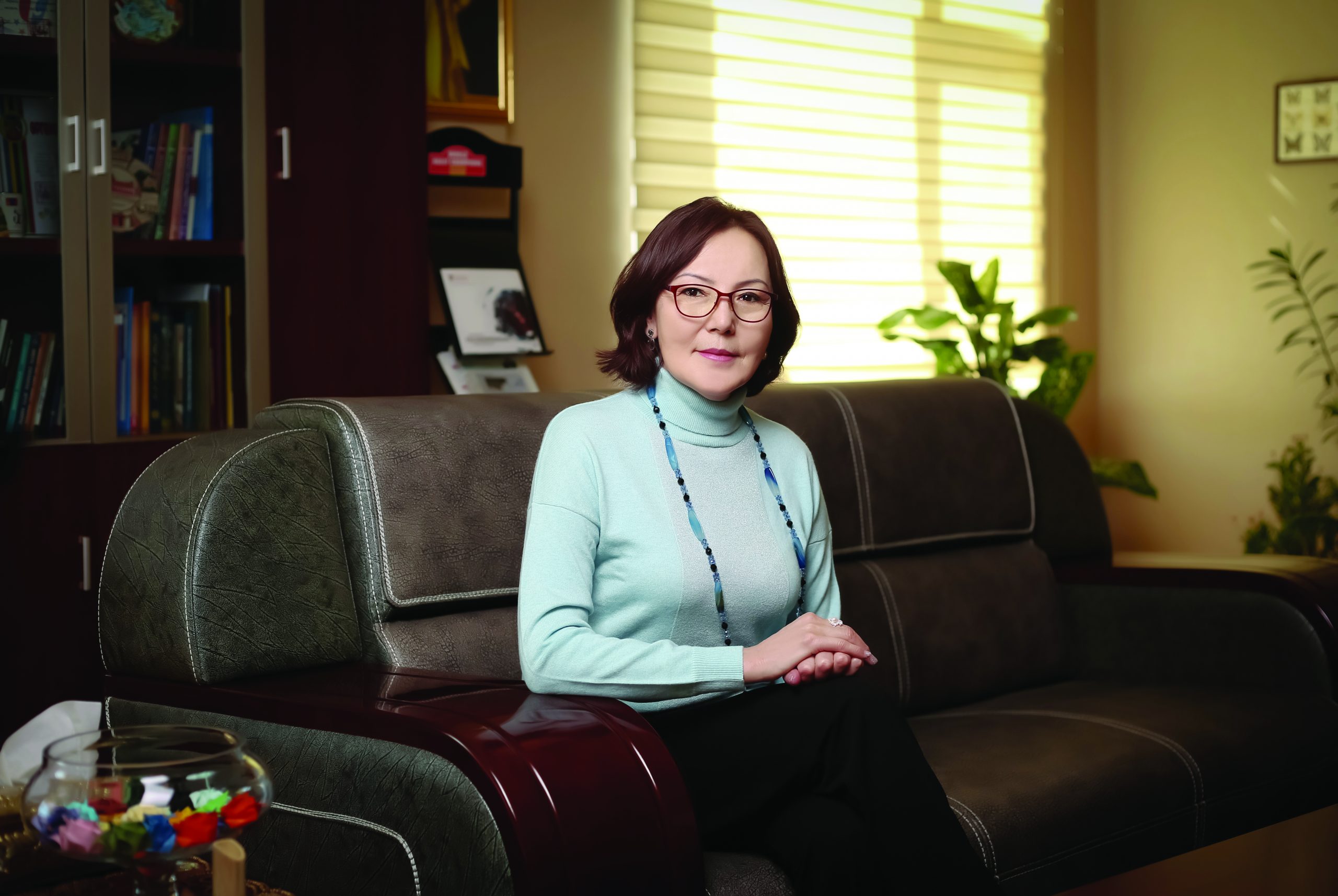
—The pandemic has posed major challenges for education, including the transition to online learning. What policies and plans has“CITI”University adopted in response?
—The pandemic has taught humanity an important lesson. Education had to move online, which also advanced technology: everyone entered online learning without an alternative. Although the pandemic presented entirely new challenges, our university was comparatively well prepared. Before the pandemic, we had prioritised technology, and our IT team had made substantial changes. We were already licensed users of Moodle and Microsoft 365 and had introduced digital learning software and established the foundations for online teaching before COVID-19 emerged. We therefore experienced relatively little disruption or difficulty. Although online learning was unfamiliar, teachers and students adapted and communicated relatively quickly. We received no complaints or disputes about teaching quality or fees during this period; both the university and its students came through with relatively little misunderstanding or loss. Students’ satisfaction also encouraged us to continue our work.
-“CITI”University is widely known, but what distinguishes it? What opportunities does it offer prospective students?
—Information about universities and other matters is now relatively accessible. Some universities advertise almost free tuition. We explain our programmes’ distinctive features rather than publicly advertising partial or full fee reductions. This does not mean we provide no assistance. We try to avoid encouraging students to choose us solely because tuition is free. Students who examine our teaching, faculty expertise and facilities and come seeking a quality education have ample access to scholarships and discounts. This is our internal policy. Learning and teaching are complex processes. We believe students should first ask how well a university can educate them and consider payment after making that choice. Consequently, those who enrol deliberately want to study at CITI University, and students are satisfied with the quality of education.
We provide substantial scholarships and fee reductions based on sporting qualifications, academic achievement, artistic talent and personal circumstances. In this respect, we rank relatively highly among universities nationwide.
Another major advantage is international cooperation. Since 2013, we have been an official Mongolian partner of EMMA, a programme supporting scholarship exchanges between universities in Europe and East Asia.
—Some regard master’s and doctoral studies as an easy route to professional advancement. Must applicants meet requirements concerning their learning methods and readiness? How should they prepare?
—Some still believe a master’s diploma alone provides an employment advantage. That view is incomplete. Applicants must understand why this is called advanced study. For the 2021–2022 academic year, we expanded our master’s and doctoral studies office into a Graduate School. Its director is a scholar who earned a doctorate at Tsinghua University. Unlike our other constituent schools, it also has a deputy director. These arrangements demonstrate the importance we attach to graduate education.
Bachelor’s education is the core of higher education. At master’s and doctoral level, however, curricula become more specialised, and courses must be taught by faculty with doctorates. Graduate study should develop thoughtful people who create value and skills within their organisations and view issues from different perspectives. Applicants should understand how these studies will advance their lives and work. We have therefore planned our graduate curriculum carefully: research is compulsory, while electives flexibly develop skills relevant to each student. Alongside professional master’s study, a research master’s involving a thesis takes 1.5–2 years; doctoral study takes three years. Students select issues relevant to their field or the labour market and investigate them in depth under doctoral scholars’ supervision.
We place considerable emphasis on graduate education. Our team includes scholars and researchers who have taught at leading institutions in Mongolia and abroad, with a separate professorial team. Master’s and doctoral education is a particularly engaging stage of higher learning; simply seeking a diploma will not take a student far.
—Graduate students are often employed, and work or family obligations can interrupt or end their studies. Does this require flexible policies?
—Those preparing for master’s and doctoral degrees approach learning at a different level. Our central aim is to educate responsible people and capable professionals. I believe we are achieving this, as students’ engagement and effort demonstrate. Their attitudes change from the outset.
Registration for graduate study has opened. Most applicants work and cannot always attend in person. Students based outside the capital or working shifts can discuss an appropriate study arrangement with their department and choose the format that suits them best. We offer blended online and classroom learning for shift workers. Teachers and students have full access to Moodle and Microsoft 365, enabling quality and flexibility. Remote students can participate alongside classmates attending in person. Moodle supports 5,000 simultaneous users, allowing students to learn from rural Mongolia or anywhere abroad.
At graduate level, students may choose programmes in arts, business or architecture. The Graduate School works closely with the constituent schools through two-way cooperation. Our graduate education mainly emphasises research. Currently, 30% of our faculty have doctorates, and our aim is for all faculty to obtain one.
Education is the foundation of national development, and educated people guide society. Institutions at every level must therefore focus on quality. We believe we have created the necessary conditions and invite excellent teachers from China, Germany, Korea and Russia. Students’ own efforts complete the process. Mongolian universities must also engage internationally, study how bachelor’s, master’s and doctoral education is delivered worldwide and apply that knowledge.