

At this time each year, the General Entrance Examination becomes a major concern for parents. Students completing secondary school and preparing for higher education are entering a particularly busy period.
CITI University has prepared advice for parents on supporting children who are focusing on their studies and preparing for the examination. Examination success depends not only on the student but also on the support parents provide.
1. Guide and assist
Have constructive, effective conversations with your child. Support their emotional well-being, help reduce stress and frustration, and assist them in using time wisely.
2. Help with time management
The workload increases sharply as students focus on mathematics, worry about literature, review English, study Mongolian, prepare for examinations and plan their future. Help them prepare weekly, daily and hourly schedules and guide effective revision.
3. Support and encourage
Offer sincere support for what your child can do, and encourage them with kind words. Avoid distant, formal statements such as ‘Your future depends on this examination’ or ‘You must do well to achieve your dreams’. Instead, say ‘Do your best’ or ‘This is an examination; your future depends on your continued effort’.
4. Avoid adding pressure
Remember that promising a reward ‘if you obtain a sufficient score’ can place considerable pressure on a child. Show that you will remain beside them even if the result is lower than hoped, and give them extra attention. Encourage confidence, calmness and careful thought, while avoiding excessive burdens and responsibility.
5. Provide suitable conditions
Even when you have important work, try to make time to create a supportive study environment at home. Arrange any necessary tuition, connect your child with people who can provide advice and information, and prepare the materials they need.
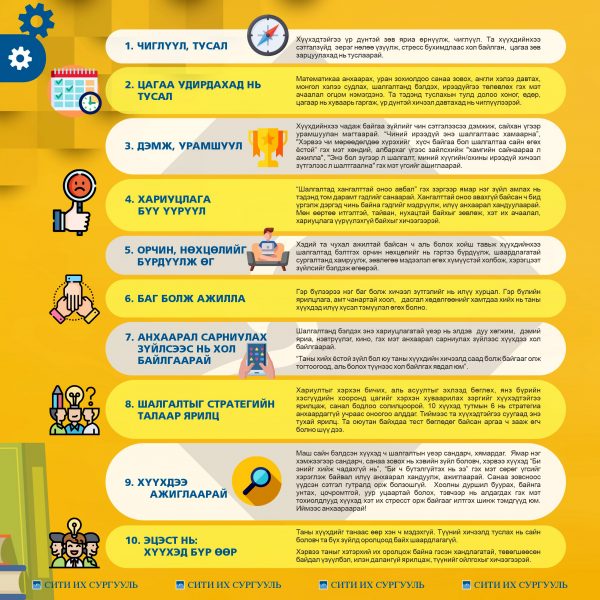 6. Work as a team
Work together as a family to sustain motivation. Family conversations, nutritious and enjoyable meals, and exercising together can strengthen your child’s enthusiasm.
7. Reduce distractions
During this important period of examination preparation, help your child avoid distractions such as loud music, unnecessary conversation, television programmes and films.
‘Identify what interferes with your child’s studies and help them minimise those distractions.’
8. Discuss examination strategy
Discuss how to record answers, which questions to attempt first, and how to divide time among sections. The source guidance states that six in ten students lose marks because they overlook strategy. Sit down and discuss this with your child; you can also share approaches you used when taking tests as a student.
9. Observe your child
Even well-prepared students can become anxious during examinations. Some worry is normal, but pay closer attention if your child repeatedly says ‘I cannot do this’ or ‘I am going to fail’. Anxiety may be accompanied by low mood. Reduced appetite, excessive sleeping, heightened sensitivity, irritability and loss of patience can indicate excessive stress. Be attentive to these signs.
10. Finally
Every child is different, and no one knows your child better than you. Helping with study is valuable, but you do not need to intervene in everything.
If your child seems frustrated or feels you are becoming overly involved, speak openly and try to understand their perspective.
We wish you success.