

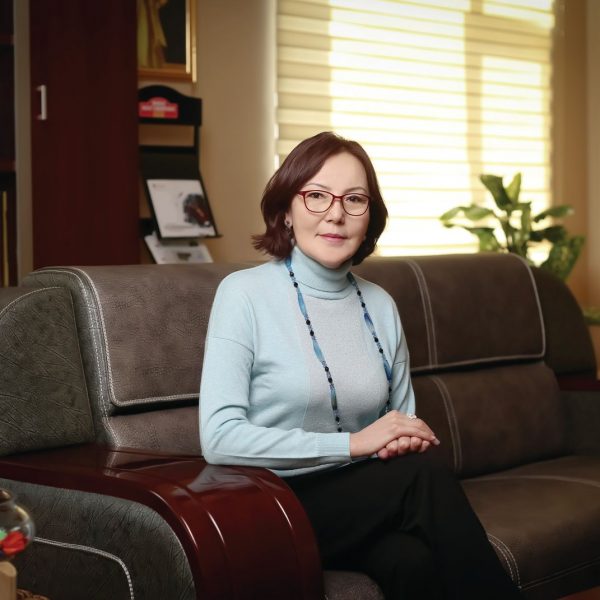
An interview with CITI University President Professor Ts. Baigalmaa, Ph.D.
— CITI University is one of Mongolia’s earliest private institutions. How has it expanded, and what policies guide its work in education?
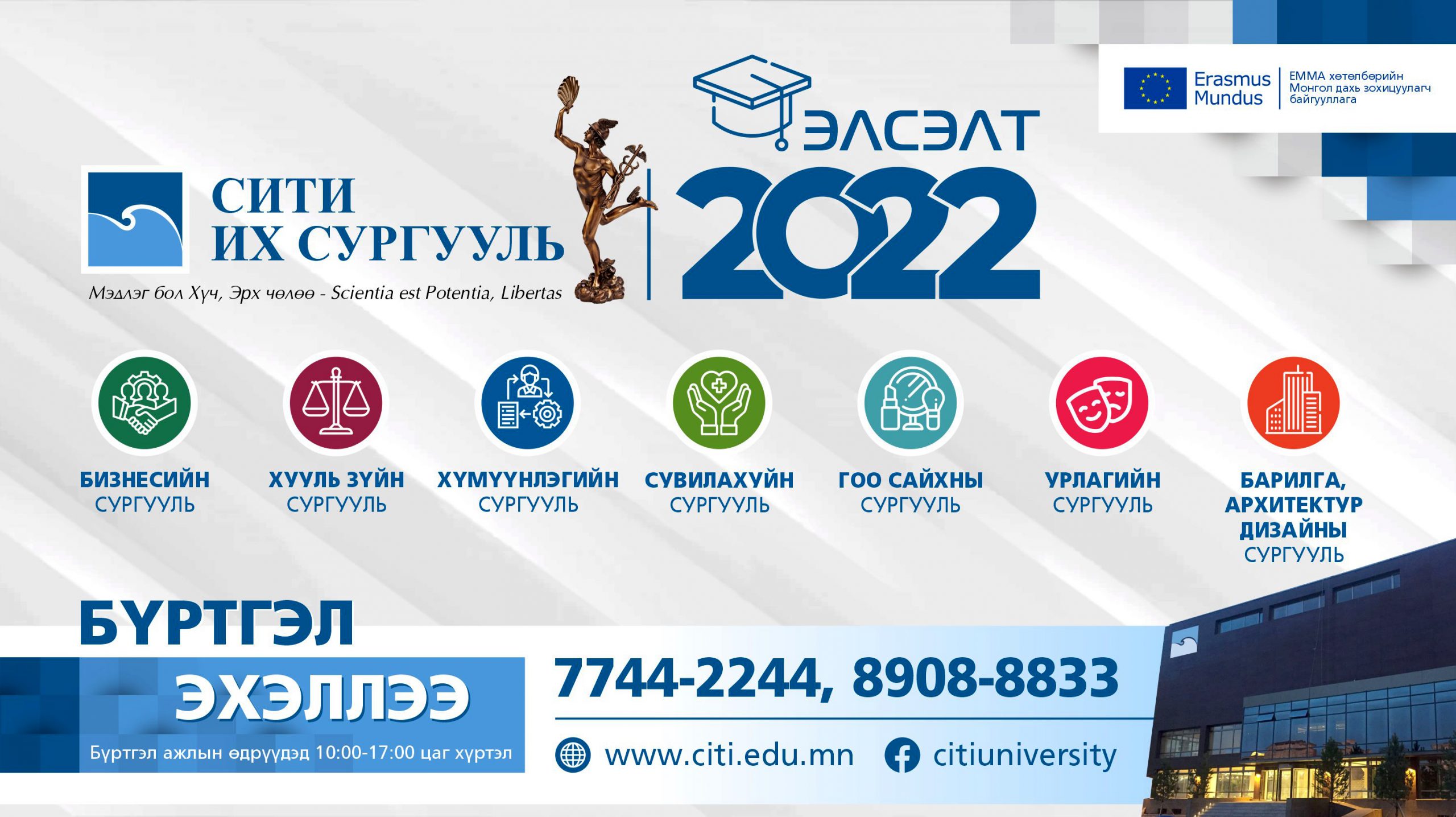
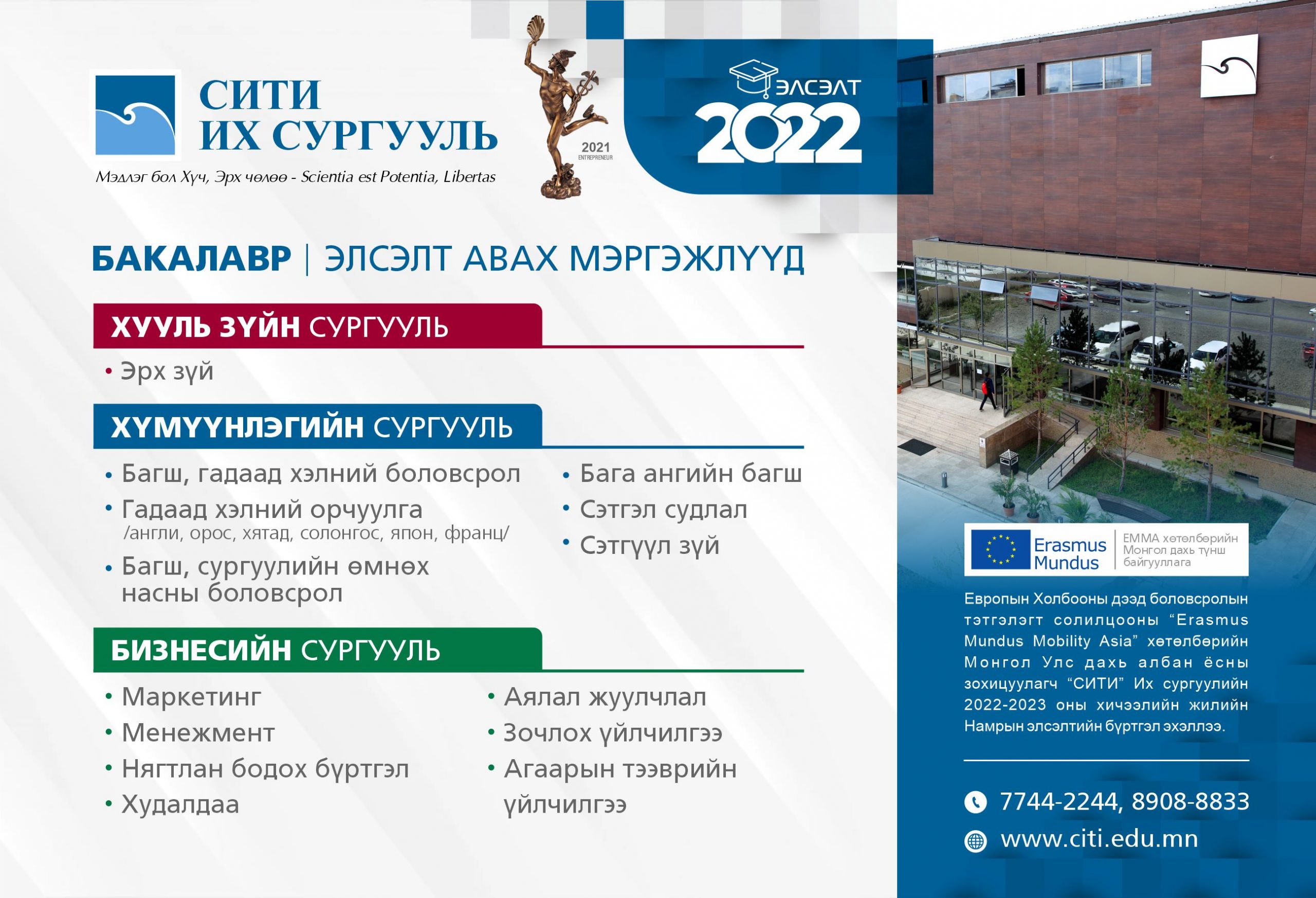
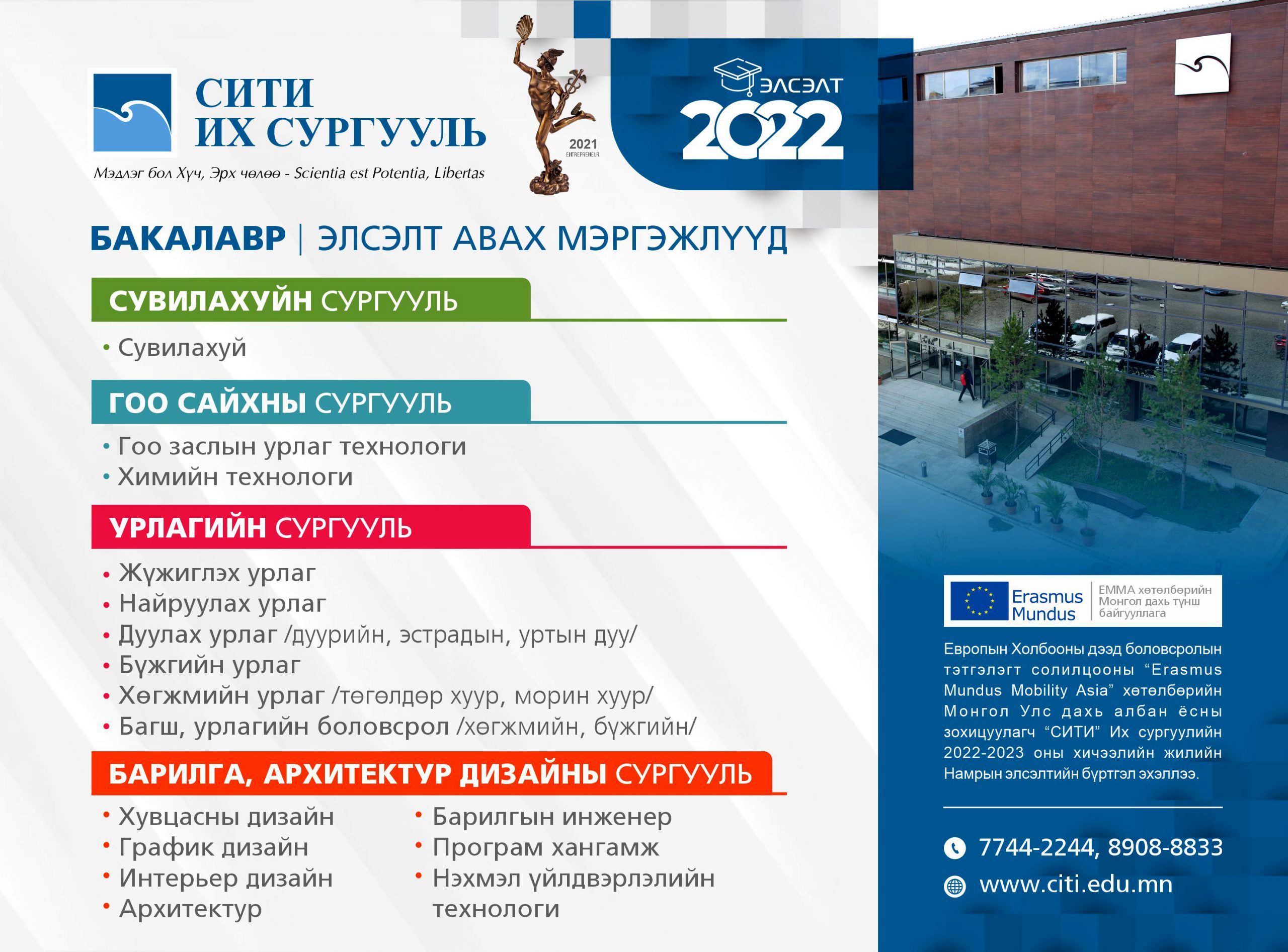
Our institution was founded in 1998 and has since grown into a university with six constituent schools. Next year we will celebrate our 25th anniversary. We place considerable emphasis on the quality of higher education and have consistently demonstrated that our role extends beyond issuing diplomas. Accordingly, we implement international programmes and expand domestic and international cooperation each year.
Our vision is to become one of Asia’s leading universities by enabling students to obtain a world-class education in Mongolia. Our community seeks to educate humane, cultured citizens who create value for society. This illustrates the scope of our work.
The quality of higher education is being discussed both in Mongolia and worldwide. A central question is how to make education accessible and provide quality learning in a society that changes daily. Mongolia is seeking solutions, and its universities are reforming their activities. We follow the same principle of responding to our time. Change is rarely easy: it depends on time, funding and many other factors. Among the 87 higher education institutions operating in Mongolia, CITI University has developed its own values and identity. We do not wish to be an institution in name only, collecting tuition without distinctive strengths. It is regrettable when higher education is measured merely by the award of a diploma.
— What distinguishes your university from others?
Entering university to acquire a single profession no longer fully meets society’s needs. A person’s future opportunities depend in part on the demand for their chosen occupation. We therefore teach students their chosen discipline while paying greater attention to personal development. We aim to prepare adaptable professionals who can develop themselves and acquire other competencies they need. In other words, we focus on foundational competencies, expertise and knowledge.
— Foundational competencies can include many things. Could you elaborate?
Consider whether someone graduating in acting will work in that occupation throughout their life. Working in one’s trained profession is natural, but age limits or difficulty finding an appropriate place in society may become obstacles. We help students consider what they can do in such circumstances. A person who has worked as a dancer for 30 years may later need other skills to sustain a livelihood. Students should therefore have the opportunity to develop a second or third specialisation while studying. This is what we mean by educating valuable citizens who can adapt and change. Knowledge already acquired cannot be taken away; we provide opportunities to use time effectively and build personal capacity.
 — Does this mean students can study and specialise in fields beyond their main discipline?
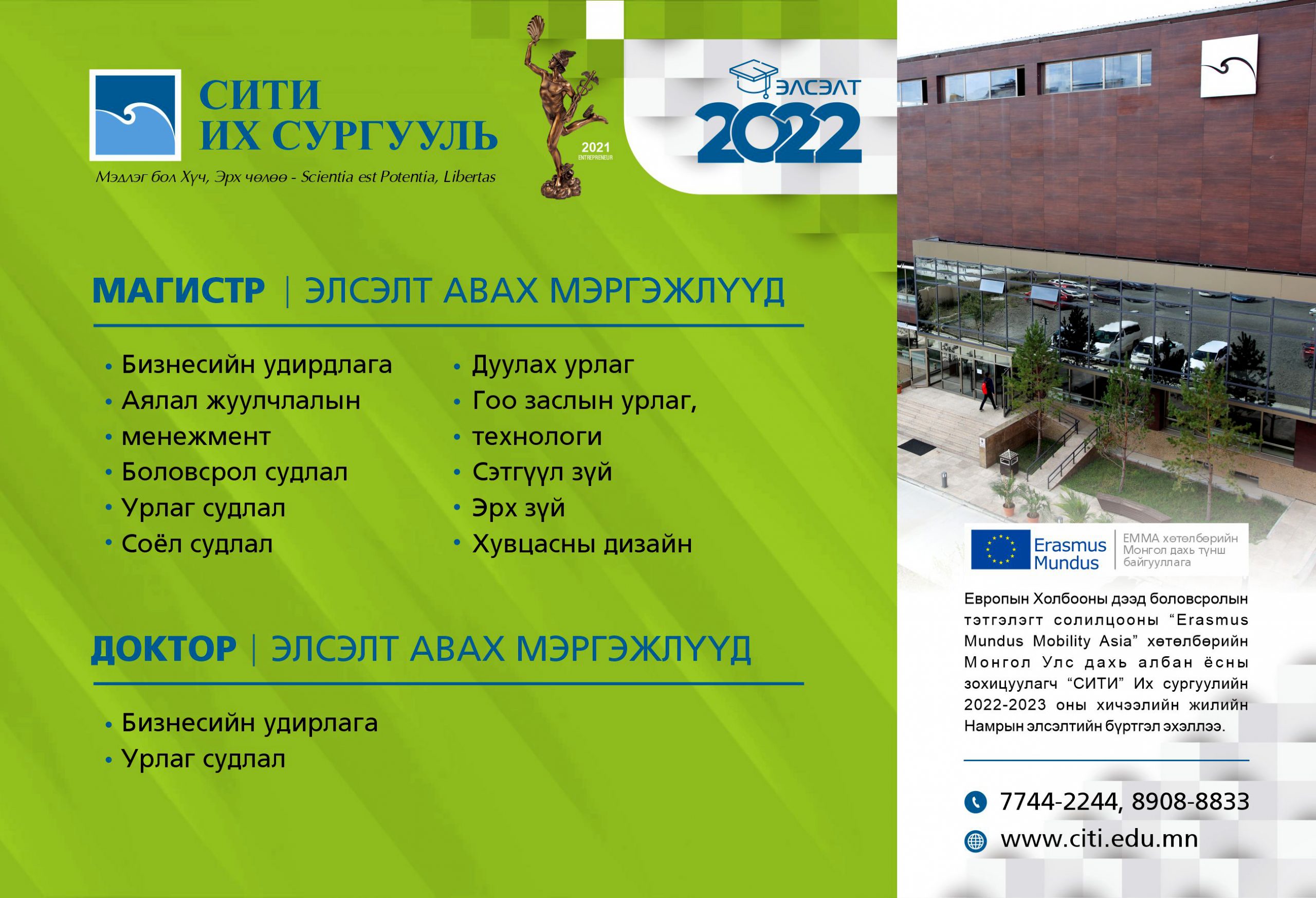
Exactly. Alongside their chosen major, students can add competencies and specialise in a second or third field. The question is how to provide this opportunity. We have recently reviewed our curricula and revised our study plans. While other universities require 120 credits, our students will complete 140 credits. During this period they will study their main discipline and develop additional competencies. We call this the Liberal Arts programme. For students training as singers or actors, we have added time to specialise in areas such as fashion design, law or business. Every sector needs adaptable professionals. We therefore encourage students to engage with this programme and study with greater creativity, skill and commitment.
We are also developing a dedicated programme for long- and short-term student placements. Too often, internships amount to little more than serving tea and coffee. Our programme seeks to replace this nominal approach and ensure that students gain the intended knowledge through practical training.
— How is cooperation expanding alongside your dedicated student placement programme?
Cooperation has always been a priority. Last year, for example, we signed memoranda with the Mongolian National Chamber of Commerce and Industry, the Financial Regulatory Commission, the Mongolian International Arbitration Centre, NEPKO LLC, and many other public and private organisations. Cooperation in student placements, joint research and graduate employment improves and expands each year. Our work also extends beyond domestic organisations: joint programmes, student exchanges and scholarships with foreign universities are progressing successfully. Over the past two years, the pandemic has caused social, economic and educational difficulties, and these have not yet entirely subsided. Nevertheless, we have continued to seek opportunities and solutions for broader cooperation and are beginning to see the benefits.
All this work aims to create opportunities for students to undertake practical training and enter employment after graduation. By becoming a member of the Mongolian National Chamber of Commerce and Industry and signing a memorandum, for instance, we gained opportunities to work closely with other member organisations, arrange placements and help meet their staffing needs. Our students also undertake practical training abroad, including paid placements in the Republic of Korea and training in Russian arts theatres. These experiences provide the knowledge students need in both domestic and international working environments.
— With which countries are you implementing joint programmes?
We actively cooperate with more than 30 foreign universities. Cooperation is not measured by agreements alone. In recent years, we have focused increasingly on 2+2 programmes, under which students study for two years in Mongolia and two years abroad. The two partner universities align their study plans to avoid duplicated courses and enable students to graduate with two diplomas. Most recently, we began cooperation with Southern Federal University in Russia on a 2+2 Psychology programme and have opened admissions. Student exchange programmes are also operating. For example, our cooperation with Chulalongkorn University in Thailand enables students to join long- and short-term exchanges. Our students study there, while their students come to Mongolia to study with us. Students from a globally respected university choosing to study here demonstrates that our students can progress alongside their peers. Our graduates have also gained opportunities to pursue master’s and doctoral study at 20 respected United States universities with tuition reductions of 20–40%. Cooperation with universities in Japan, Korea and France established in previous years continues. In line with our vision and objectives, CITI University continues to expand international cooperation and programmes, seek opportunities and achieve the results we aim for.
— The entrance examination threshold has been raised. What is your position?
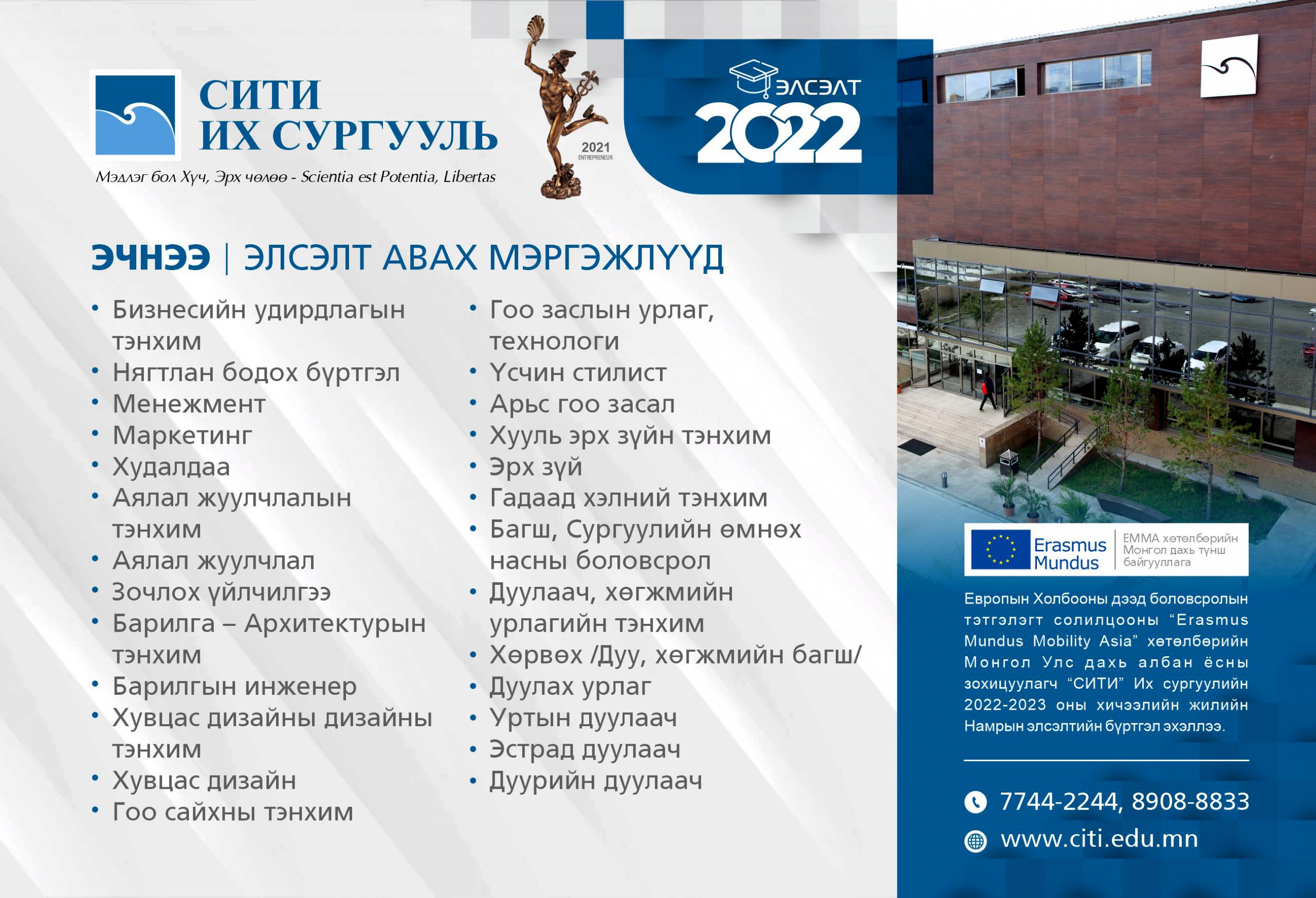
The Ministry of Education and Science has made the minimum score the same for public and private institutions. This is the right decision. Previously, the system appeared to discriminate by implying that higher-scoring applicants should enter public universities because they were better, while lower-scoring applicants should enter private institutions because they were worse. I welcome the removal of that distinction. This academic year, CITI University will conduct admissions independently and follow the same minimum-score standard as public universities.Our criteria extend beyond the minimum score. The university has its own standards and is recognised for its learning environment and support for student development. Active, cultured students who value themselves and sincerely wish to develop choose CITI University. Young people selecting a future profession should consider more than a university’s entrance threshold or low tuition. They should carefully assess the opportunities the institution offers, the learning environment, and how they can develop beyond the essential content of their degree.
— COVID-19 prompted the education sector to reform and move online. How did CITI University teach its international students during the past two years?
The pandemic created difficulties in many sectors, including education. We responded by moving online and introducing an online learning framework and new systems. Although classes did not fall behind, this was a major change requiring adaptation by people accustomed to classroom learning. Our university enrols students from Russia, the Republic of Korea, Japan, China, Belgium, the United States and France, among other countries. Although the pandemic has eased, border reopening arrangements mean that our international students are still studying online. Students from other countries are also applying. To prepare, we are expanding international student accommodation and teaching facilities. This year, additional programmes will undergo accreditation before admissions. Students from different countries learn from one another’s cultures, customs and experiences. Their presence also places high expectations on faculty. Alongside teaching Mongolian to international students, we are gradually moving towards teaching courses entirely in English. We also require students to develop English proficiency and plan to begin English-medium courses from the second year. The pandemic has brought both difficulties and opportunities. We continue to adapt, improve quality and develop the conditions needed to operate as an international university.
— Thank you for the interview.