

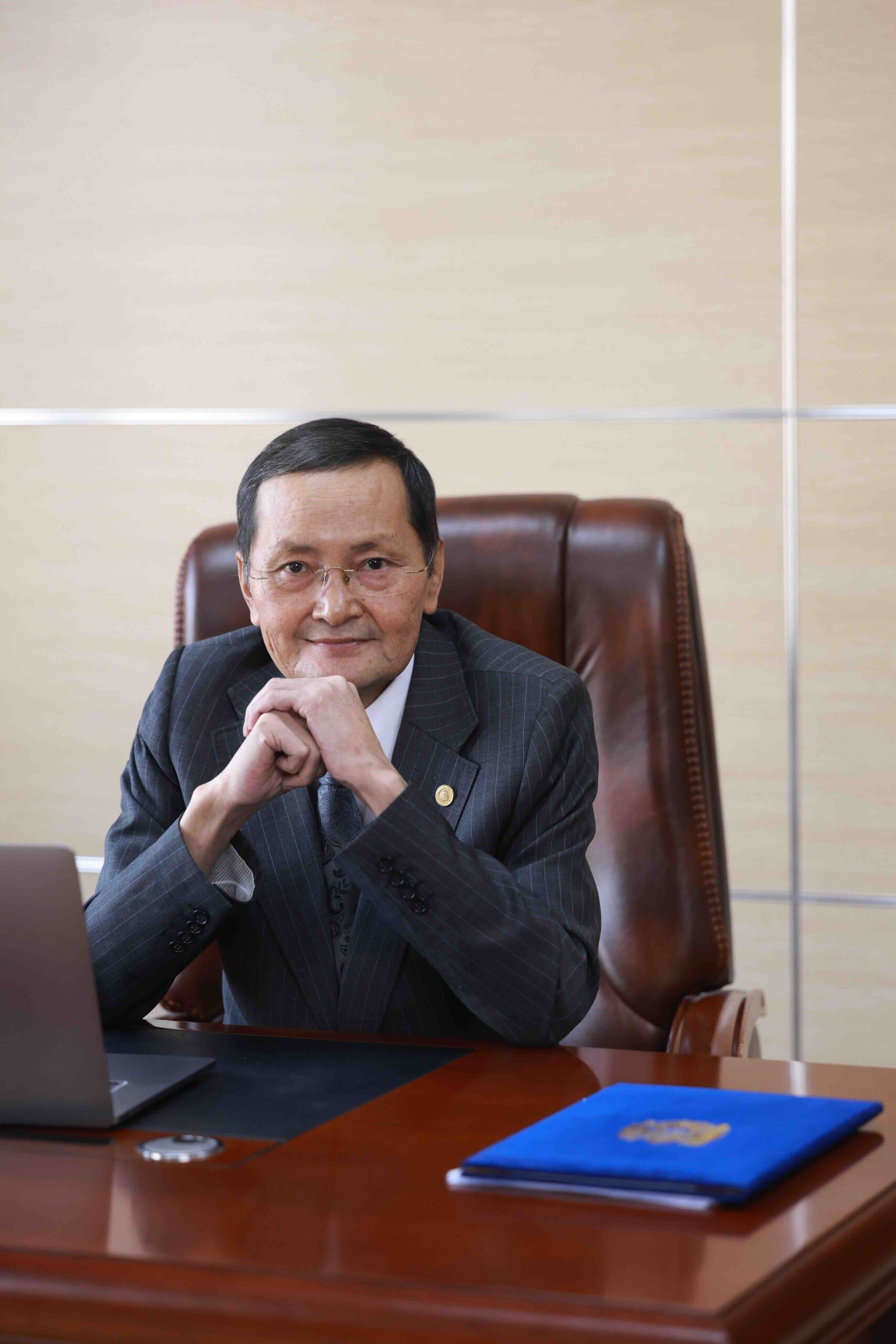
An interview with J. Temuujin, Director of Research at CITI University.
 — Could you describe CITI Science and its international registration?
— CITI University began publishing CITI Science in 2021 to improve research quality, support the international recognition of findings, and share research with the public and other scholars. It provides a forum for scientific results and discussion. In 2023, we revised the editorial board, journal policies and author guidelines to develop its international profile. Three international scholars joined the editorial board. Papers written in Mongolian must now include English abstracts, English figure and table captions, and the corresponding authors’ ORCID identifiers.
Beginning with the first issue of 2024, the journal registered with Crossref and began assigning official Digital Object Identifiers (DOIs). Articles can now be located worldwide through their DOIs. This is a first step towards international recognition, facilitating citation and long-term access to the work. The journal’s DOI prefix is 10.60167, accessed through www.doi.org.
— Which research areas does the university prioritise?
— Each constituent school has identified its priorities. We also plan to revise institution-wide priorities in line with sustainable development policy and objectives, with particular attention to waste management research and development and urban development.
— How does the university involve and support faculty and students in research?
— We use policy documents covering support and assessment of student research, research and innovation, university-funded projects, intellectual property, and incentives for faculty research publications. CITI University aims to develop as an internationally recognised research institution.
— How is international research cooperation developing?
— CITI University cooperates with partner universities as a Mongolian partner in the European Union-funded Erasmus Mundus Mobility with Asia programme connecting European and Asian universities. We also maintain bilateral cooperation with universities in Singapore, Malaysia, India, France, Japan and the Republic of Korea.
— What major developments do you see in Mongolian science and technology?
— The comparison period matters. Since the 1990s, there have been clear changes in research quality and international recognition. In 1992–1993, the number of publications recorded in Scopus was only two or three; now publications increase by hundreds annually and citations by thousands. Although researcher numbers have fallen by several thousand compared with the period before 1990, publication output in international scholarly journals has improved substantially. However, for various practical reasons, translating research into competitive patents, technologies and industrial applications has not progressed as intended. Research supporting sustainable development is particularly important. Researchers also need to assess the government’s proposed major projects, discussed at the recent Science and Participation national forum, and participate actively in feasible projects.